


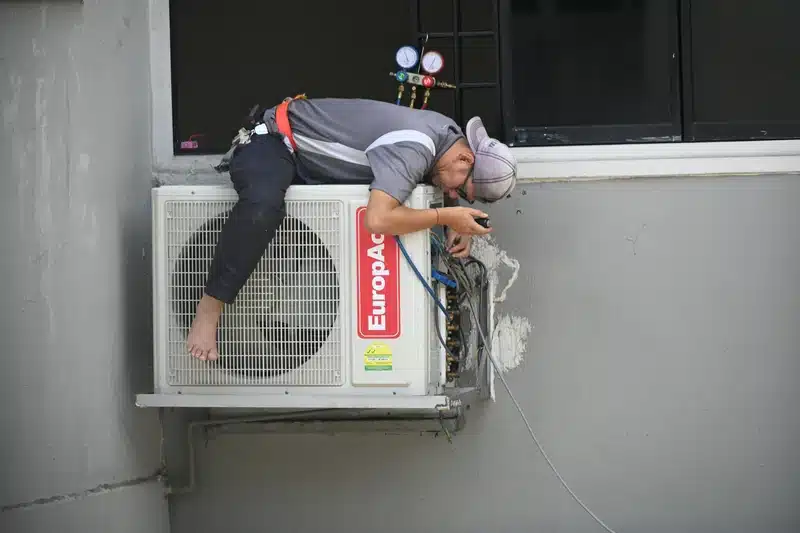
It usually happens at the worst time. The air conditioning stops working during a heatwave, or the furnace goes out in the middle of winter. For many homeowners, the first thought is to look up a quick fix online. YouTube videos and DIY guides make it look easy, and buying a replacement part from the hardware store feels cheaper than calling a technician. But what starts as an attempt to save money often ends with higher bills, damaged equipment, or even safety risks.
In places like Willoughby, OH, where winters can be bitter and summers can get hot, HVAC systems are not optional—they’re essential. That makes it tempting to grab a screwdriver and attempt a repair when problems come up. The reality is that most DIY fixes don’t solve the real issue. Instead, they often create bigger and more expensive problems that could have been avoided with professional help.
HVAC Systems Are More Complex Than They Look
At first glance, an HVAC system seems simple. There are filters to change, vents to clean, and a thermostat to adjust. But behind those basic tasks lies a network of mechanical, electrical, and refrigerant components that must all work together.
For example, something as basic as airflow involves fans, motors, belts, and ductwork. Each piece must be balanced to move air efficiently. A homeowner might think replacing a motor is straightforward, but without proper calibration, the new part can put stress on the blower or strain other connected components.
These systems are designed to be maintained with specialized training, and overlooking that complexity can cause more damage.
On the other hand, working with a licensed HVAC technician ensures that the system is repaired correctly and safely.
This is especially true for major upgrades, such as heat pump installation in Willoughby, OH. Installing new equipment is not just about connecting parts. It involves correct sizing, proper ductwork adjustments, and safe electrical connections. A professional installation makes sure the system delivers reliable heating and cooling for years while also protecting the manufacturer’s warranty.
The Safety Hazards Behind DIY HVAC Work
Few homeowners realize how many safety risks are tied to HVAC systems. Many units run on high voltage electricity. A single mistake when handling wiring can cause electric shock or even fire. Even routine-looking repairs, like replacing a capacitor, carry risks if handled without training.
Refrigerants present another serious danger. They must be handled with proper certification because they can cause burns, frostbite, or even poisoning if released. Ventilation systems also play a role in indoor air safety. An improperly handled furnace repair, for instance, could lead to carbon monoxide leaks. What might look like a minor repair can expose homeowners to hazards that trained technicians are specifically taught to avoid.
The Risk of Voiding Your Warranty
Most HVAC systems come with warranties that cover expensive parts, such as compressors or heat exchangers. But those warranties usually come with one important condition: all repairs must be done by a licensed technician. The reason is simple—manufacturers know that improper repairs can cause damage unrelated to the original problem.
When a homeowner attempts a DIY fix, even a small one, they risk losing warranty protection. If the system breaks down later, the manufacturer or installer may refuse coverage, leaving the full cost of replacement on the homeowner. What seems like a small way to save money can result in thousands of dollars in unexpected costs.
How Incorrect Repairs Drive Up Energy Bills
One of the biggest hidden costs of a DIY HVAC fix is higher utility bills. When a system is not repaired correctly, it often has to work harder to deliver the same level of comfort. For example, if a blower motor is installed without proper alignment, it may strain to push air through the ducts. This reduces efficiency and makes the system run longer.
Improper refrigerant levels are another common issue. Too much or too little refrigerant changes the pressure in the system and forces the compressor to work harder. This not only shortens the life of the unit but also increases energy use month after month. An HVAC system that is not properly serviced can consume more energy than one that has been maintained correctly. A repair that was meant to save money often results in higher bills instead.
Why Proper Tools and Equipment Matter
HVAC technicians rely on specialized equipment to do their work. Diagnostic tools like refrigerant gauges, airflow meters, and thermal imaging cameras allow them to identify problems accurately. Homeowners rarely have access to these tools, and even if they do, using them correctly requires training.
Without the right equipment, most DIY repairs turn into guesswork. For example, checking refrigerant levels requires precise pressure measurements that can’t be done with standard household tools. Similarly, diagnosing electrical issues often involves advanced multimeters and safety gear. When homeowners try to make do with basic tools, they risk either missing the actual problem or creating new ones. Professional-grade equipment is one of the biggest differences between a reliable repair and a temporary patch.
How Small Mistakes Lead to Major Breakdowns
HVAC systems depend on balance. Airflow, refrigerant charge, and electrical input all need to match up. A single mistake can throw the system out of balance. For instance, wiring a thermostat incorrectly may cause the furnace or air conditioner to short cycle, which places heavy strain on motors and compressors. Over time, this repeated stress can cause permanent damage.
Even simple mistakes, such as not securing a panel tightly or failing to clean components properly, can shorten the lifespan of the system. These errors add up. Instead of preventing a breakdown, a DIY fix can speed one up. In many cases, homeowners only realize the damage when the entire unit fails and replacement becomes the only option.
DIY HVAC repairs often start with good intentions but usually end with bigger and more expensive problems. Complex systems are easy to misdiagnose, and without the right tools, repairs often miss the root cause. Safety hazards, higher energy bills, voided warranties, and overlooked issues are just some of the risks homeowners face when they try to fix systems on their own.
The reality is that HVAC systems are not built for trial-and-error repairs. They require training, precision, and the right equipment to keep them safe and efficient. Working with a professional technician ensures not only proper repair but also peace of mind. Instead of taking a risk with DIY fixes, homeowners are better off investing in expert service that protects both their comfort and their wallet.
