


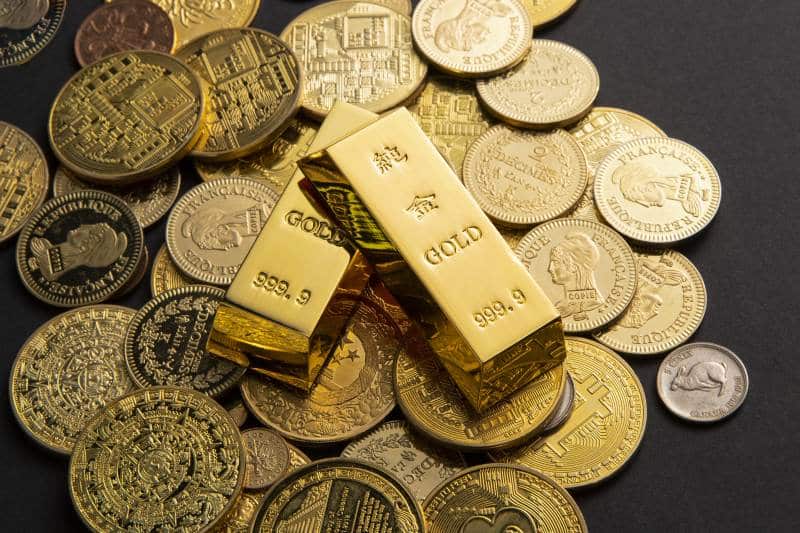
Gold continues to hold a special place in global markets, even as digital currencies and complex financial products grow in popularity. Investors still turn to physical gold for stability during uncertain times, drawn to its history as a store of value that has outlasted currencies, governments, and market cycles. Physical gold remains a safe haven because it offers real, measurable worth that does not depend on digital systems or financial promises.
This lasting trust in gold reflects more than tradition. It reflects how tangible assets can protect wealth when inflation rises, markets fall, or political tensions spread. As central banks increase their reserves and supply stays limited, gold’s role as a steady safeguard continues to stand out in a fast-changing financial world.
Intrinsic Value and Tangibility: Physical gold has inherent worth and is a tangible asset that cannot be digitally hacked or erased
Physical gold holds value because it exists as a real, measurable metal. Its worth comes from properties such as scarcity, durability, and universal recognition. Unlike digital currencies or electronic assets, gold cannot disappear through a system failure or cyberattack.
Investors view gold as a store of value that stands apart from financial systems. It does not rely on a network or central authority to prove ownership. A bar or coin can be held, stored, or passed on directly, which gives it a sense of permanence.
A gold investment firm helps investors access this tangible security through physical bullion and retirement accounts backed by real metals. These firms guide clients who want diversification that includes assets they can physically verify.
Because gold’s value comes from its inherent qualities, it often retains demand even during market stress. Its physical nature gives investors confidence that their wealth exists in a form that cannot be erased or digitally altered.
Inflation Hedge: Gold consistently retains value during inflationary periods, protecting purchasing power.
Gold often holds its value even as the cost of goods and services rises. Its price tends to increase as currencies lose strength, which helps protect wealth from the effects of inflation. This stability gives investors confidence during uncertain economic conditions.
Unlike paper money, gold has a limited supply that cannot be expanded by central banks. As a result, its scarcity helps preserve purchasing power over time. Investors often view it as a practical safeguard against the erosion of money’s value.
Historical data show that gold usually performs well during periods of high inflation. For example, past decades marked by rapid price growth often saw stronger gold prices compared to other assets. Therefore, many investors include physical gold in their portfolios to balance the risks that inflation poses to traditional investments.
Global Economic Uncertainty: During geopolitical crises or market collapses, gold remains stable or appreciates
Periods of global tension often unsettle investors. Trade disputes, political conflict, and financial instability can weaken confidence in paper assets. In these moments, many turn to physical gold because it tends to hold its value even as other markets decline.
Gold’s appeal comes from its independence from government policies or corporate earnings. Unlike currencies or stocks, it does not rely on economic growth or interest rates. Therefore, it often moves differently from other assets, offering balance in uncertain times.
Historical data show that gold prices often rise during recessions or geopolitical shocks. For example, major conflicts and financial crises have repeatedly driven demand upward. This pattern reflects a broad belief that gold protects wealth during instability.
Investors view gold as a store of value that resists inflation and currency depreciation. As a result, it remains a preferred asset for those seeking stability amid global uncertainty.
Central Bank Reserves: Increasing gold holdings by central banks underscores their role as a trusted asset
Central banks across the world have raised their gold reserves in recent years. They view gold as a stable store of value that performs well during financial stress. This trend reflects a steady move to reduce reliance on traditional reserve assets such as government bonds or foreign currencies.
Many central banks cite inflation, interest rate shifts, and geopolitical risks as reasons to hold more gold. Unlike paper assets, gold carries no default risk and maintains value across economic cycles. Therefore, it serves as a form of financial insurance in uncertain times.
Recent surveys show that a growing number of institutions plan to keep adding to their gold holdings. This steady demand highlights gold’s ongoing importance in global reserves. It also signals that central banks continue to trust physical gold as a safeguard for national wealth.
Limited Supply: Scarcity of physical gold supports its long-term value preservation
Physical gold remains scarce because the Earth holds only a fixed amount of it. Most accessible deposits have already been mined, and new discoveries occur less often. As a result, the total global supply grows slowly compared to demand. This limited availability helps gold maintain its worth over long periods.
Mining new gold has also become harder and more expensive. Ore grades decline, and extraction costs rise as miners reach deeper or lower-quality sources. These challenges restrict new output and reinforce gold’s reputation as a finite resource.
Recycling adds some supply, yet it cannot replace what mining no longer provides. Therefore, investors view gold’s scarcity as a key reason it preserves value through economic cycles. The metal’s physical limits create a sense of permanence that few modern assets can match.
Conclusion
Physical gold continues to hold value because it preserves purchasing power and resists inflation over long periods. Investors still view it as a dependable store of wealth during uncertain economic times.
Its appeal also lies in independence from digital systems and paper assets. Unlike currencies that can lose value or face policy risks, gold maintains stability through physical ownership.
Modern markets may offer new asset types, yet gold’s historical record and universal acceptance keep it relevant. Therefore, it remains a practical choice for those who seek stability and diversification in their portfolios.
