


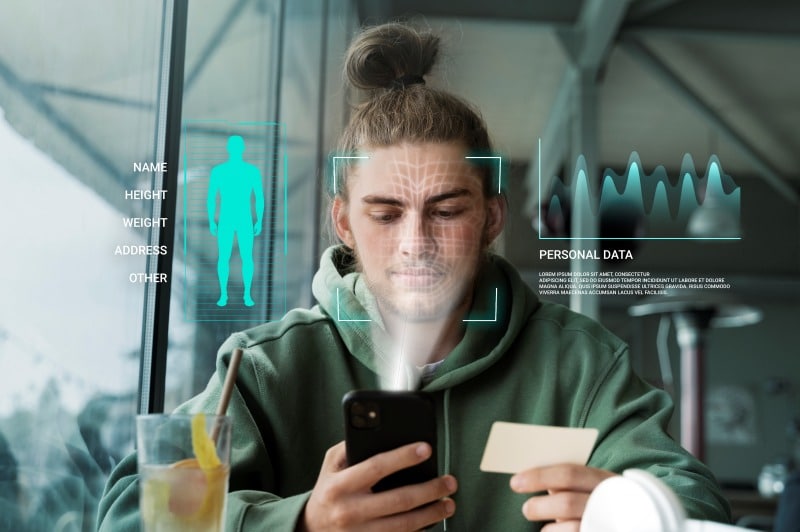
Real-time face tracking lets CCTV detect a face in a live feed and keep following it as the person moves. In higher-risk environments, teams may pair it with deepfake detection to spot signs of manipulated video or synthetic faces at critical checkpoints.
It’s best understood as “finding and following,” not instantly “knowing who someone is.” When identity matching is enabled, accuracy and compliance demands increase, and human review becomes even more important.
What Can It Do Well in Real Environments?
When lighting and camera placement are solid, face tracking can reduce manual screen-watching and speed up response.
- Detect faces in live video and maintain a continuous track
- Help PTZ cameras auto-follow and keep faces in view
- Trigger alerts when faces enter defined zones or time windows
- Reduce noise by prioritizing human faces over general motion
- Support analytics like people flow and dwell time trends
The best results come when alerts are tuned to support operators, not flood them.
What Can’t It Reliably Guarantee?
It can’t promise perfect recognition or perfect identity matching. Performance drops with low light, occlusions, extreme angles, and low-resolution footage. Even with strong models, similar-looking faces and scene artifacts can still create false positives.
Treat outputs as decision support: a prompt for verification, not a final verdict.
What Makes It Fail More Often Than People Expect?
Most failures come from camera and scene conditions, not “bad AI.”
- Backlighting, shadows, glare, and inconsistent illumination
- Faces too small in frame due to wide angles or long distances
- Motion blur from fast movement or slow shutter settings
- Occlusion from masks, hats, helmets, hands, or crowd overlap
- Steep top-down mounting angles that hide facial features
Improving lighting and increasing pixels per face usually beats endless software tweaking.
How should teams set up alerts without overwhelming operators?
A practical setup uses thresholds and context so the operator sees fewer, better signals. For example, you can limit alerts to specific zones (entrances, restricted corridors), apply minimum face-size rules, and require a consistent track for a few frames before triggering. That simple “stability check” cuts down on one-frame glitches caused by reflections or fast head turns.
It also helps to design the alert itself like a mini-brief: camera name, timestamp, snapshot, and a short reason such as “restricted zone entry” or “high-confidence match for review.” When operators get structured alerts, they spend less time guessing and more time verifying.
How do privacy and retention choices affect real-time face tracking?
Even if you never attach a name, face tracking can still produce sensitive data because it creates searchable events and behavior patterns. A cleaner approach is to collect only what you actually use: keep short clips tied to alerts, limit who can access them, and set retention to a defined period that matches your security purpose.
If identification is enabled, governance becomes non-negotiable. Enrollment should follow clear authorization, access should be restricted, audits should log searches and exports, and policies should spell out how matches are reviewed and escalated. These steps keep the system useful while reducing risk and misuse.
Final Thoughts
Real-time face tracking helps teams spot and follow faces faster, but it still depends on camera quality, scene control, and human judgment. Adding deepfake detection can strengthen trust in what the camera sees, especially at sensitive entry points.
