


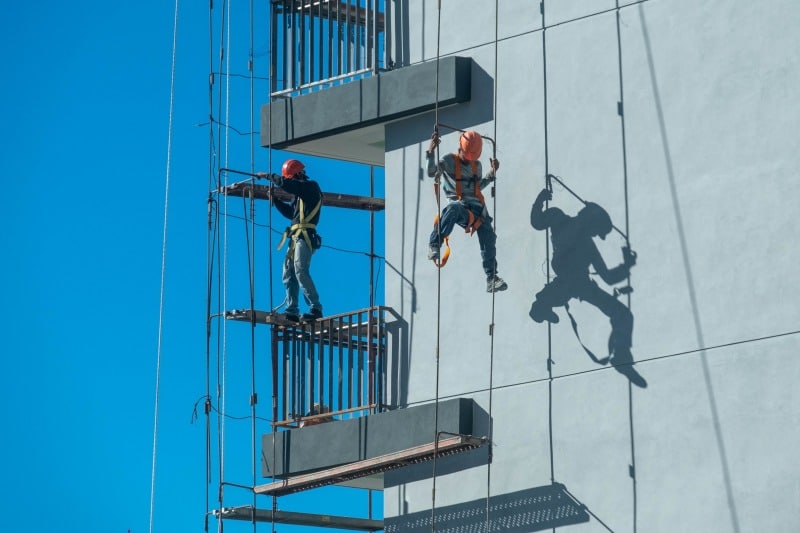
In the high-stakes world of industrial work, the “Fall Protection” section of the safety manual used to be a list of hardware: harnesses, lanyards, and anchor points. But as we navigate 2026, the industry has undergone a paradigm shift. We are no longer just buying gear; we are implementing an integrated fall protection solution.
Safety managers today are moving away from reactive measures and toward holistic systems that combine smart technology, ergonomic design, and the Hierarchy of Controls.
The 2026 Standard: Integration Over Isolation
A modern fall protection solution is no longer a standalone piece of equipment. It is a three-pillar system designed to eliminate human error:
Smart Anchors & IoT Connectivity: Modern anchors are now equipped with sensors that alert safety officers the moment a fall occurs, providing GPS coordinates for immediate rescue.
The “Active” Harness: Gone are the days of bulky, restrictive webbing. Today’s harnesses use lightweight, breathable materials that move with the worker, reducing “compliance fatigue”—the primary reason workers unbuckle on the job.
Digital Twin Planning: Before a single boot touches the site, specialists use Digital Twins to simulate work at heights, identifying potential fall hazards in a virtual environment.
Why “Off-the-Shelf” is No Longer Enough?
Every facility has its own DNA. A warehouse in the Midwest has different structural requirements than an offshore oil rig. A truly effective fall protection solution must be customized to the specific geometry of the workspace.
| Component | Traditional Approach | The 2026 Solution |
| Risk Assessment | Manual clipboards & “gut feel” | AI-driven hazard mapping |
| Equipment Selection | One-size-fits-all harnesses | Job-specific ergonomic systems |
| Training | Annual classroom videos | VR-based immersive simulations |
| Rescue Plan | “Call 911” | Automated, on-site rescue systems |
The “ABCD” of Fall Protection Still Matters
While technology has advanced, the fundamentals remain the cornerstone of any system. When auditing your current setup, remember the ABCDs:
- A – Anchorage: The secure point of attachment (must support at least 5,000 lbs per worker attached).
- B – Body Wear: The full-body harness that distributes fall forces.
- C – Connectors: The devices (shock-absorbing lanyards or SRDs) that link the harness to the anchor.
- D – Descent & Rescue: The often-forgotten plan to retrieve a fallen worker safely and quickly to avoid suspension trauma.
The Bottom Line: Protecting Your Most Valuable Asset
A fall protection solution isn’t just a line item in the budget; it’s an investment in your company’s culture. When workers feel truly secure, productivity rises and turnover drops. In 2026, “safe enough” is no longer the standard. The goal is zero-incident infrastructure.
