


Key Takeaways
- Healthcare leaders are leveraging technology and innovation to enhance patient care and operational efficiency.
- Artificial intelligence (AI) and digital transformation are central to proactive healthcare models.
- Collaborations with startups and tech companies are driving rapid advancements in healthcare services.
- Inclusive innovation and social capital are emerging as critical factors in healthcare success.
Embracing Technology and Innovation
Healthcare organizations are increasingly turning to technology and innovation to improve operations, enhance patient outcomes, and strengthen long-term stability. Leaders across the sector are recognizing that digital tools, such as data analytics, telehealth platforms, and electronic health records, can streamline processes and support more informed decision-making. By integrating technology into daily operations, administrators can better coordinate care, reduce inefficiencies, and respond more effectively to changing patient needs. These advancements highlight the central role of strategic leadership in guiding organizations through complex healthcare environments.
To navigate these evolving demands, many professionals pursue advanced education that blends clinical understanding with business strategy. Programs like an MBA healthcare management online help develop skills in leadership, financial planning, and operational management while addressing emerging technological trends. With this knowledge, healthcare leaders are better equipped to implement innovative solutions that support organizational growth and adaptability. As technology continues to reshape the healthcare landscape, leaders who combine management expertise with an understanding of digital transformation are well-positioned to guide institutions toward sustainable success.
AI and Digital Transformation
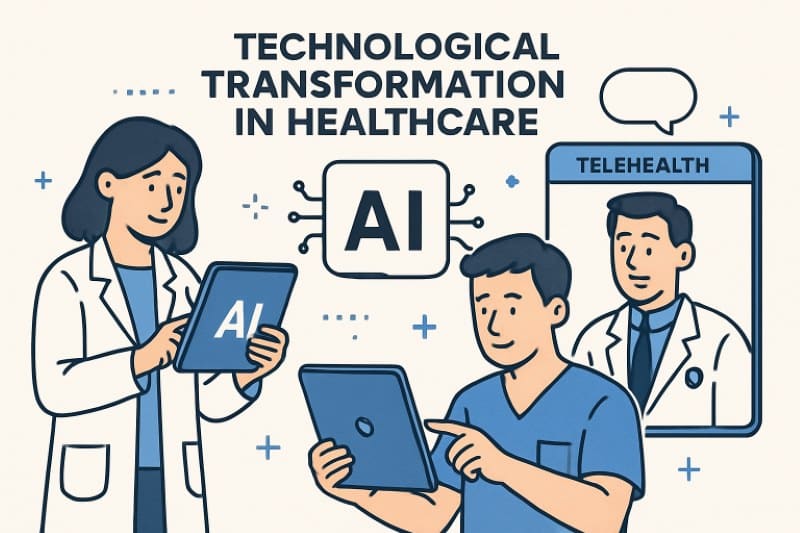
The integration of artificial intelligence is transforming how care is delivered and how decisions are made throughout healthcare systems. This digital transformation includes expanding telehealth, implementing virtual triage, and adopting data-driven decision-making tools, thereby shifting healthcare from a reactive to a proactive model. Automated risk identification, personalized engagement, and advanced clinical decision support are significantly improving both clinical and operational outcomes.
Additionally, patient access and experience are enhanced through smarter scheduling systems, digital check-ins, and AI-powered chatbots that offer instant assistance. Healthcare executives are under increasing pressure not only to respond to these changes but also to lead their organizations in adopting digital solutions to ensure they are prepared for the future.
Collaborations with Startups
Successful healthcare leaders recognize that driving innovation sometimes requires looking beyond established practices and established vendors. By partnering with emerging startups and technology companies, healthcare organizations gain first-mover advantages and access to pioneering solutions that can transform care delivery. Whether deploying remote patient monitoring wearables or advanced machine learning algorithms for diagnostics, collaborations such as these accelerate the pace of change and encourage out-of-the-box thinking.
Inclusive Innovation and Social Capital
True innovation in healthcare means delivering benefits widely, across diverse communities, and with a commitment to equity. Healthcare leaders are increasingly intentional about building inclusive teams and co-developing solutions with frontline staff and patient communities. Inclusive AI efforts, such as those designed with diverse languages and socioeconomic contexts in mind, ensure that breakthroughs reach all populations, not just the most privileged.
Beyond technical solutions, thriving healthcare organizations know that social capital, the relational glue among employees, clinicians, and administrators, is a key ingredient for sustainable success. By cultivating open communication channels, celebrating achievements, and fostering trust, healthcare leaders are building resilient organizations where both patient and staff well-being are central.
Case Studies of Successful Leadership
Scaling Innovation at Humana
Humana, under the leadership of CEO Bruce Broussard, stands as an example of transformational leadership in the healthcare sector. The organization’s willingness to embrace digital health tools, data-sharing platforms, and technology-driven partnerships has enabled it to deliver more coordinated, value-based care experiences. This transformation has been powered by investments in electronic health records and remote patient management, which have become foundational pillars for their approach.
Corewell Health’s Focus on Proactive Care
Corewell Health, led by CEO Tina Freese Decker, demonstrates an agile adoption of AI and digital communications. By prioritizing virtual health and remote diagnostics, the health system has expanded access and improved patient satisfaction, demonstrating that leadership-level innovation directly translates into measurable improvements for communities.
Future Trends in Healthcare Leadership
The future of healthcare leadership is likely to be defined by the successful integration of predictive AI tools, advanced analytics, and real-time decision support at all levels of health organizations. By 2025, AI-driven platforms are expected to become mainstream decision aids, providing instant access to evidence-based research and improved predictive guidelines for treatment. Data fluency and digital mindset will be must-have skills for executives, clinicians, and administrators alike.
Another emergent trend is the growing importance of cross-sector collaboration—not only with technology innovators but also with public health professionals, payers, and patient advocacy groups. This multidisciplinary approach will accelerate the adoption of new technologies and ensure that healthcare progress is closely aligned with population needs.
Conclusion
Healthcare leaders are reshaping business success with forward-thinking strategies that embrace technology, spark innovation, and foster inclusive cultures. Through the strategic use of AI, active collaboration with startups, and a focus on social capital, these leaders are achieving breakthroughs in both patient care and operational efficiency. As the industry continues to change rapidly, those who prioritize adaptability, digital literacy, and thoughtful leadership will set new standards for success and patient-centered care in tomorrow’s healthcare landscape.
