


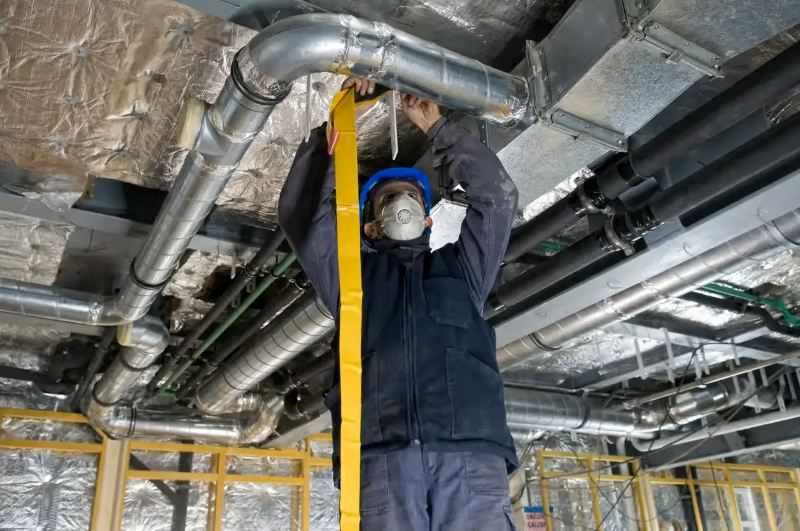
Achieving consistent home comfort and managing energy bills efficiently are top priorities for homeowners in Alabama. When we consider an AC replacement, it’s easy to focus solely on the new unit itself. However, the existing ductwork plays a vital role in your system’s overall performance. Neglecting this crucial component can lead to uneven temperatures, wasted energy, and a shorter lifespan for your brand-new air conditioner. Understanding how ductwork is evaluated during AC replacement is key to ensuring your home stays cool and comfortable, especially as we head into October 2026.
For a deeper dive into whole-home climate control, explore our ultimate guide to Maintaining Comfort with Professional HVAC Services for complete residential HVAC services, or contact us to schedule your service evaluation today.
We often overlook the hidden network of ducts that distribute conditioned air throughout our homes. Yet, these pathways are critical. Poorly designed, damaged, or leaky ductwork can reduce your HVAC system’s efficiency by 10% to 40%, leading to significant energy waste. Imagine losing up to 30% of your cooled air before it even reaches your living spaces – that’s money literally blowing away.
This comprehensive guide will walk you through the essential process of ductwork evaluation during an AC replacement. We will cover why it matters, the specific steps HVAC professionals take, the technical metrics they use, and when sealing, repairing, or replacing ducts is the best course of action. We will also explore the risks of installing a new AC unit with incompatible ductwork and the long-term benefits of addressing these issues concurrently. For those seeking expert AC and heating services, understanding this process is crucial for a truly efficient and comfortable home.
The Importance of Ductwork Evaluation During AC Replacement
When considering an AC replacement, the temptation is often to focus solely on the new cooling unit itself – its brand, efficiency rating, and capacity. However, a new air conditioner is only as effective as the system it’s connected to. The ductwork, often out of sight and out of mind, is the circulatory system of your home’s comfort. It’s responsible for delivering conditioned air from your AC unit to every room and returning stale air for reconditioning. Without a properly designed and maintained duct system, even the most advanced new AC unit will struggle to perform optimally.
One of the most critical aspects evaluated is static pressure. This refers to the resistance to airflow within the duct system. High static pressure can be caused by undersized ducts, crimped flexible ducts, dirty filters, or closed dampers. When a new, powerful AC unit is installed on a duct system with high static pressure, it forces the blower motor to work harder. This leads to increased energy consumption, reduced airflow to rooms, and premature wear and tear on the new equipment. The result is energy waste, as the system consumes more power to deliver less comfort, and a significant efficiency loss that negates the benefits of your new, high-efficiency AC unit. Estimates suggest that poorly installed ductwork can reduce HVAC efficiency by 10% to 40%, translating into substantial annual utility costs that could be avoided.
Furthermore, proper system sizing is paramount. An AC unit is sized based on your home’s cooling load, which includes factors like insulation, windows, and climate. However, if the ductwork cannot effectively distribute that conditioned air, the AC unit will either be undersized for the actual delivery or oversized for the compromised distribution. This mismatch can lead to short-cycling, inadequate dehumidification, and uncomfortable temperature swings. Investing in a new AC without evaluating the ductwork is akin to buying a high-performance engine for a car with a clogged fuel line – it simply won’t achieve its potential.
To illustrate the variety of materials and their typical longevity, here’s a comparison:
Ductwork Material Characteristics Typical Lifespan (Years) Considerations Galvanized Steel Durable, rigid, excellent airflow, custom-fabricated 20-30+ Higher installation cost, requires professional work Aluminum Lightweight, corrosion-resistant, rigid 20-25 Less common for residential, can be dented Duct Board Fiberglass panels, lightweight, easy to fabricate 10-15 Prone to moisture damage, mold, and fiber erosion Flexible Duct Insulated, easy to install, adaptable 15-25 Prone to kinks, crushing, tears, airflow restriction Fiberboard Similar to duct board, but denser 15-20 Can absorb moisture, requires careful sealing Understanding Duct Degradation Over Time
Ductwork, like any other component of your home, is subject to wear and tear. Over years of service, particularly in attics, crawl spaces, and basements, ducts can degrade significantly. Aging ducts often show signs of deterioration, such as brittle insulation, loose connections, and rust on metal components. The constant cycle of heating and cooling causes thermal expansion and contraction, which can stress joints and seals, leading to cracks and gaps.
The insulation surrounding ducts, especially flexible ducts, can break down over time due to exposure to extreme temperatures, moisture, and pests. This insulation breakdown reduces the R-value, allowing conditioned air to lose or gain heat as it travels through unconditioned spaces. The most common issue, however, is air leakage. Joints sealed with old duct tape or mastic can dry out and crack, leading to significant leaks. Ducts can also be physically damaged by rodents, accidental impacts, or improper installation practices, resulting in tears or punctures. This connection failure allows conditioned air to escape into unconditioned areas like attics or crawl spaces, dramatically reducing the amount of cool air reaching your living spaces.
Integrating Residential HVAC Services with Whole-Home Comfort Standards
A comprehensive AC replacement project goes beyond simply swapping out equipment; it involves integrating the new system with your home’s specific needs and existing infrastructure. Professional residential HVAC services adhere to industry-recognized standards to ensure optimal performance. This begins with a thorough Manual J load calculation, which precisely determines the heating and cooling requirements of your home based on its size, insulation, windows, and other factors. This calculation ensures the new AC unit is perfectly sized – neither too big nor too small.
Following ACCA standards (Air Conditioning Contractors of America) ensures that the entire system, including the ductwork, is designed and installed for peak performance. This includes verifying that the duct system can handle the airflow of the new unit, ensuring proper return air pathways, and balancing the supply and return air to maintain consistent pressure throughout the home. The goal is balanced airflow to every room, preventing areas from being too hot or too cold. Without proper ductwork, achieving consistent room temperature and optimal humidity levels becomes a constant struggle, even with a brand-new, high-efficiency AC. A holistic approach ensures that the new AC unit and the existing ductwork work in harmony to deliver superior comfort and efficiency.
How Residential HVAC Services Assess Existing Air Distribution Systems?
When our team performs an AC replacement, evaluating the existing ductwork is a critical preliminary step. This process goes far beyond a cursory glance. We employ a systematic approach using specialized tools and diagnostic protocols to understand the current state of your air distribution system.
The assessment typically begins with a thorough visual inspection of all accessible ductwork. This includes examining ducts in attics, crawl spaces, basements, and utility closets. We look for obvious signs of damage, such as crushed or kinked flexible ducts, disconnected joints, tears in insulation, mold growth, and rodent infestations. The physical integrity of the ducts is paramount; any compromise can lead to significant leaks or blockages. We also assess the air barrier around the ducts, ensuring that insulation is intact and preventing thermal loss. The overall duct layout is also considered, noting any excessively long runs, sharp bends, or poorly designed transitions that could impede airflow.
Key Diagnostic Steps Covered by Residential HVAC Services
A professional ductwork evaluation during AC replacement involves several key diagnostic steps to quantify performance and identify issues:
- Static Pressure Measurement: This is a crucial test. We use a manometer to measure the static pressure in both the supply and return plenums. High static pressure indicates excessive resistance to airflow, which can be caused by undersized ducts, dirty coils, or restrictive filters. This measurement helps determine if the existing ductwork can handle the airflow requirements of the new AC unit without overworking the blower.
- Duct Leakage Test: This test quantifies the amount of conditioned air escaping the duct system. A duct blaster fan is used to pressurize the ductwork, and a gauge measures the leakage rate in cubic feet per minute (CFM) or as a percentage of total airflow. Significant duct leakage means a substantial portion of your cooled air never reaches your living spaces, leading to discomfort and wasted energy.
- Blower Airflow Measurement (CFM Verification): Using specialized tools, we measure the actual blower airflow in CFM (Cubic Feet per Minute) across the indoor coil or at various points in the duct system. This helps us determine if the system is delivering the designed amount of air. If the airflow is too low, it can lead to coil freezing, poor dehumidification, and reduced cooling capacity. If it’s too high, it can create excessive noise and strain the system.
- Supply and Return Plenum Assessment: We meticulously inspect the supply plenums and return air pathways. These components are critical for distributing and collecting air efficiently. Issues like undersized return ducts or restrictive grilles can severely limit airflow and impact overall system performance.
Standardized Evaluation Protocols and Testing Standards
To ensure consistency and accuracy, our evaluations often follow established industry protocols. One such example is the ANSI/ACCA 310 Standard for Grading the Installation of HVAC Systems. This standard provides a rigorous, sequential tasks methodology for evaluating HVAC system design and installation quality. It outlines specific procedures, tolerances, and record-keeping requirements.
The evaluation process typically follows these steps:
- Design Review: Before any physical testing, a thorough review of the HVAC design documentation is conducted. This includes architectural plans, HVAC specifications, ventilation system details, and load calculations (like Manual J). This step ensures the system was initially designed correctly for the home.
- Total Duct Leakage Test: As described above, this test quantifies air loss.
- Blower Fan Volumetric Airflow Test: This verifies the actual airflow delivered by the blower.
- Blower Fan Watt Draw Test: This measures the power consumed by the blower motor, which can indicate if it’s working too hard due to restrictive ductwork.
- Non-Invasive Refrigerant Charge Evaluation: In addition to ductwork, this is the final step in a comprehensive HVAC system evaluation.
Each of these steps has specific thresholds that must be met. For instance, if the design review or duct leakage test fails to meet the specified tolerances, subsequent tasks cannot be completed until the issues are addressed. This systematic approach, utilizing tools like manometer readings for static pressure and verifying fan watt draw, ensures a thorough and reliable assessment of your ductwork’s compatibility with a new AC unit.
Sealing vs. Replacing: Choosing the Right Ductwork Strategy
Once our HVAC professionals have completed their comprehensive evaluation, a crucial decision often arises: should the existing ductwork be sealed and repaired, or is a full replacement necessary? This choice depends on the extent of the damage, the age of the ducts, and their compatibility with the new AC system.
Minor issues like small leaks, loose connections, or inadequate insulation can often be remedied through professional Aeroseal application or meticulous manual sealing with high-quality mastic and UL-181 foil tape. This approach can be highly effective and cost-efficient. However, if the ductwork suffers from extensive structural damage (e.g., severely crushed sections, widespread tears), significant mold contamination that cannot be safely remediated, or is fundamentally undersized for the new AC unit and the home’s cooling load, then replacement becomes the more prudent and beneficial option.
Another factor is the existing R-value insulation. If the insulation is degraded, insufficient for the climate, or has been compromised by moisture or pests, simply sealing the ducts won’t address the thermal losses. In such cases, adding insulation or replacing insulated ducts is essential for energy efficiency.
Here’s a comparison to help understand when each strategy is most appropriate:
Criteria Duct Sealing Duct Replacement Primary Issues Leaks, minor disconnections, inadequate insulation Structural damage, mold, severe undersizing, old age Effectiveness High for air loss, moderate for thermal loss High for all issues, complete system redesign Intervention Level Less intrusive, often quicker More intrusive, longer duration, more labor Lifespan Impact Extends functional life of existing ducts Provides new, full lifespan for duct system Ideal Scenarios Relatively new ducts, good condition otherwise Old ducts (15-20+ years), significant damage Warning Signs Indicating Immediate Duct Repair or Replacement
Homeowners can often spot early indicators that their ductwork needs attention. Recognizing these warning signs can prompt a professional evaluation before minor issues escalate:
- Uneven Cooling/Heating: If some rooms are consistently hotter or colder than others, despite the thermostat setting, it often points to airflow issues in the ductwork. This could be due to leaks, blockages, or improper sizing.
- Excessive Dust: While some dust is normal, a sudden increase in dust accumulation throughout the house can indicate leaky return ducts pulling dust from unconditioned spaces (like attics or crawl spaces) into your living areas.
- Whistling Registers: A whistling or hissing sound coming from supply registers often signifies that the ductwork is undersized or partially blocked, causing high static pressure as air is forced through a restricted opening.
- Crushed Flex Duct: Flexible ducts are prone to being crushed or kinked, especially in tight spaces. A severely crushed flex duct can restrict airflow by 50% or more, dramatically reducing comfort in the affected room.
- Ducts in Unconditioned Attic/Crawlspace: If your ducts run through an unconditioned attic or crawl space and are not adequately insulated or sealed, they will lose a significant amount of conditioned air. You might feel a noticeable temperature difference around these areas.
- Moldy Odors: A persistent musty or moldy smell, especially when the AC is running, can indicate moisture intrusion and mold growth within the ductwork, which is a serious health concern.
Financial and Efficiency Impacts of Proper Duct Sizing
The decision to properly size and seal or replace ductwork is not just about comfort; it has profound financial and efficiency impacts. Installing a new AC unit onto an undersized or leaky duct system is a recipe for disaster.
Firstly, it leads to compressor strain. The new AC unit’s compressor, the heart of the cooling system, will work harder and longer to try and meet the thermostat setting, even if much of the conditioned air is lost or restricted. This constant strain increases energy consumption and accelerates wear. Secondly, it can cause short cycling, where the AC turns on and off frequently without completing a full cooling cycle. This is inefficient, wastes energy, and puts undue stress on the compressor.
The direct consequence is higher energy consumption. With 20% to 30% of cooled air potentially leaking into unconditioned spaces, your AC unit has to run longer to maintain the desired temperature, leading to inflated utility bills. Over time, this increased workload can significantly shorten the equipment lifespan of your expensive new AC unit, leading to premature breakdowns and costly repairs or replacements.
Conversely, addressing ductwork issues at the time of AC replacement provides substantial utility savings. By ensuring proper sizing, sealing, and insulation, the new AC unit can operate at its peak efficiency, delivering conditioned air effectively to every room. This translates into lower energy bills, a more comfortable home, and a longer, more reliable life for your HVAC system.
Long-Term Benefits of Upgrading Ductwork Along with Equipment
Making the decision to upgrade your ductwork concurrently with your AC replacement is a strategic investment that yields significant long-term benefits beyond just immediate comfort. It’s about optimizing your entire home comfort system for years to come.
One of the most immediate and impactful benefits is improved indoor air quality (IAQ). Leaky ductwork can draw in dust, allergens, mold spores, and even insulation fibers from attics, crawl spaces, and wall cavities, circulating them throughout your home. Sealing or replacing ducts prevents this infiltration, leading to cleaner, healthier air for you and your family.
Another noticeable improvement is noise reduction. Undersized or poorly installed ducts can create whistling, rattling, or booming noises as air is forced through constricted pathways or vibrates loose components. Properly sized and sealed ductwork, especially with appropriate insulation, significantly dampens these sounds, contributing to a quieter and more peaceful home environment.
The primary benefit, of course, is enhanced thermal comfort. With a well-designed and sealed duct system, conditioned air is delivered efficiently and evenly to every room. This eliminates hot and cold spots, ensuring consistent temperatures throughout your home and making your living spaces truly comfortable.
Furthermore, addressing ductwork issues can provide crucial warranty protection. Many AC manufacturers specify operational parameters for their equipment, including acceptable static pressure ranges. If a new AC unit is installed on a severely restrictive duct system that causes it to operate outside these parameters, it could potentially void the manufacturer’s warranty, leaving you responsible for future repair costs. By ensuring the ductwork is compatible, you protect your investment.
Upgrading your ductwork offers an excellent return on investment. While there’s an initial cost involved, the savings in energy bills, extended equipment lifespan, reduced repair frequency, and improved indoor comfort quickly make up for it. It transforms your HVAC system from just a cooling appliance into a truly integrated, high-performing home comfort solution.
Frequently Asked Questions About HVAC Ductwork Evaluation
Homeowners often have questions about the practicalities of ductwork evaluation during an AC replacement. Here are some common inquiries:
How long does a professional ductwork evaluation typically take?
The evaluation duration can vary depending on the size and complexity of your home, as well as the accessibility of your ductwork. For a typical residential property, a comprehensive diagnostic testing and visual inspection process usually takes between 1 to 3 hours. This inspection timeline includes static pressure measurements, a duct leakage test, airflow verification, and a thorough visual assessment of all accessible duct runs and connections. More complex systems or homes with extensive, hard-to-reach ductwork might require additional time.
Can installing a new AC on old ductwork void the manufacturer warranty?
While it doesn’t automatically void the warranty, installing a new AC unit on severely compromised or incompatible ductwork can certainly jeopardize it. Manufacturer warranties often stipulate that the equipment must be installed and operated according to their specifications. If the existing ductwork creates excessive static pressure or causes the system to operate outside its designed operational thresholds (e.g., the blower motor constantly running at maximum capacity due to restriction), it can lead to premature equipment failure. Manufacturers may deny warranty claims if they determine that the failure was due to improper installation or operation caused by faulty ductwork, rather than a defect in the unit itself. Ensuring warranty compliance is another strong reason to address ductwork issues during AC replacement.
What efficiency losses occur if leaking ducts are ignored?
Ignoring leaking ducts can lead to substantial efficiency losses for your HVAC system. As mentioned earlier, estimates indicate that 20% to 30% of conditioned air can be lost through leaks in the ductwork before it even reaches your living spaces. This means your new AC unit has to work significantly harder and longer to cool your home, leading to increased utility expenses. For a typical household, this could translate into hundreds of dollars wasted annually on energy bills. Beyond the financial impact, this constant overworking contributes to faster system degradation, reducing the lifespan of your new AC unit and increasing the likelihood of costly repairs down the line. It’s a continuous cycle of inefficiency and unnecessary expense.
Conclusion
The decision to replace your AC unit is a significant investment in your home’s comfort and energy efficiency. However, to truly maximize that investment, it’s crucial to look beyond the shiny new equipment and focus on the often-overlooked network of ducts that distribute conditioned air throughout your home. Understanding how ductwork is evaluated during AC replacement empowers you to make informed decisions that benefit your home for years to come.
A thorough ductwork evaluation ensures optimal system performance, guarantees consistent comfort delivery to every room, and is a vital component of proactive planning for your home’s HVAC needs. By addressing issues like leaks, inadequate sizing, or damaged insulation, you extend the equipment longevity of your new AC unit, reduce energy waste, and improve indoor air quality. A comprehensive approach to AC replacement that includes professional ductwork evaluation is not just a smart choice; it’s an essential step in protecting your HVAC investment and ensuring a truly comfortable, efficient, and healthy home environment.
