


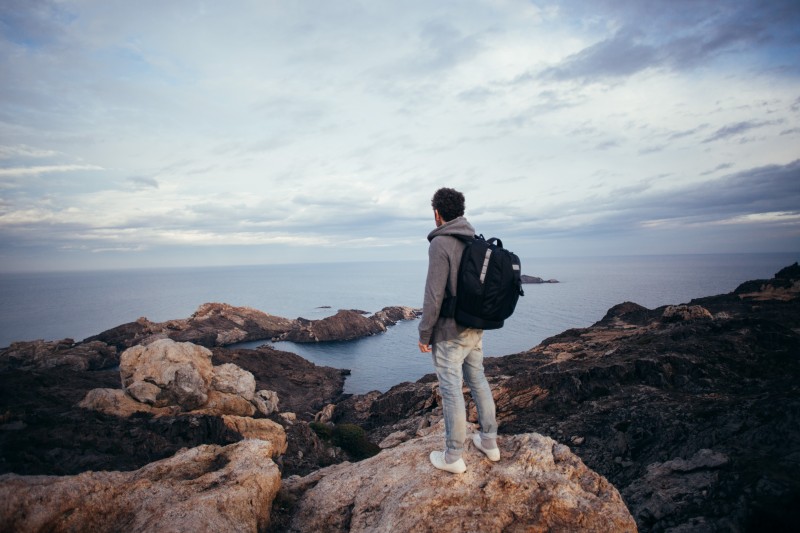
While we often view happiness as a shared experience, solo travel is a powerful psychological tool for self-care. It isn’t about loneliness; it’s about prioritizing your relationship with yourself. At home, we constantly react to others—adjusting our energy for bosses, friends, and family. We rarely ask what we actually want. Going solo breaks this “social mirror,” providing a rare space where your needs are the only priority. By removing the pressure to perform or compromise, you stop living on autopilot and start reconnecting with your true identity away from the expectations of your daily life.
Introduction: Being Your Own Best Friend
Solo travel is often misunderstood. Many people think it is an act of bravery or a sign that someone doesn’t have friends. In reality, it is a form of solitude in motion. It is the practice of being your own best friend and learning to enjoy your own company. When you travel with others, you are often distracted by their needs and moods. When you are alone, you can finally hear your own internal voice.
Learning to be comfortable with yourself is a skill that pays off for the rest of your life. If you are feeling nervous about the idea of solitude, you can find helpful advice and mental health tips on this website that explain how to embrace your own company while staying balanced. Once you realize that you are enough to make a trip wonderful, you stop fearing being alone and start seeing it as a luxury.
Making Your Own Choices Every Day
One of the most immediate benefits of solo travel is the total freedom of choice. In a group, even small decisions like where to eat or when to wake up can involve a long debate and compromise. This is called “decision fatigue.” We spend so much energy trying to keep everyone happy that we often end up doing things we don’t even like.
When you travel alone, that weight is gone. If you want to spend four hours in a bookstore, you can. If you want to skip a famous landmark to take a nap in a park, nobody will stop you. This freedom helps you reconnect with your own “gut feelings.” You learn to listen to your internal cues—your hunger, your tiredness, and your curiosity—rather than external pressure.
This strengthens your sense of control over your own life.
The Freedom of Being a Stranger
At home, everyone knows who you are. They know your job, your personality, and your mistakes. This can feel like a cage because you often feel forced to act the way people expect you to act. Travel offers the gift of anonymity. In a city where no one knows your name, you can drop your “act.”
You might find that you are more adventurous, more talkative, or more reflective than you are at home. This is the “Anonymity Advantage.” It allows you to experiment with your identity. You realize that much of your behavior at home is just a habit performed for others.
Without those witnesses, you can find out who you are at your core.
Learning That You Can Handle Anything
Solo travel is a great way to build real, lasting confidence. When you are with a partner, it is easy to let them handle the map or the difficult conversations. When you are alone, you are the pilot. You will inevitably face small problems, like getting on the wrong train or dealing with a language barrier.
Every time you solve one of these problems by yourself, your brain records a “win.” You are building “self-efficacy,” which is the deep knowledge that you are capable and resourceful. You move from a mindset of “I hope I’ll be okay” to “I know I can handle it.” That feeling of being a strong, capable person stays with you long after you get home.
Finally Finding Some Peace and Quiet
We live in a world that is constantly noisy. Our phones, our jobs, and our social lives keep our minds spinning. Solo travel provides the “white space” that we need to process our lives. Without a companion to talk to, you are left with your own thoughts during long train rides or solitary meals.
This quiet isn’t something to be afraid of; it is where deep reflection happens. It gives you the chance to think about where your life is going and what you really want. Many people make their biggest life decisions while traveling alone because they finally have the mental room to see clearly. It is a rare chance to have an honest conversation with yourself.
Noticing the Little Things
When you travel with someone else, your attention is often split between the world and your companion. You spend a lot of time talking. When you are alone, your senses sharpen. You notice the smell of the bakery down the street, the way the light hits an old building, and the small details of local life.
Because you aren’t distracted, you become more “present.” This mindfulness reduces anxiety and makes your memories much richer. You aren’t just looking at the world; you are truly experiencing it. You feel more connected to your surroundings because you are fully there to witness them.
Summing Up
The best person you will meet on a solo trip is the “new you.” You return home with more than just photos; you return with a deeper friendship with yourself. You have proven that you can be your own best friend, your own navigator, and your own hero.
Solo travel isn’t about escaping from people; it’s about returning to yourself. It reminds you that while it is wonderful to share the world with others, you have everything you need to be happy right inside you. By the time you land back home, you aren’t just a traveler—you are a person who knows, likes, and trusts themselves.
