


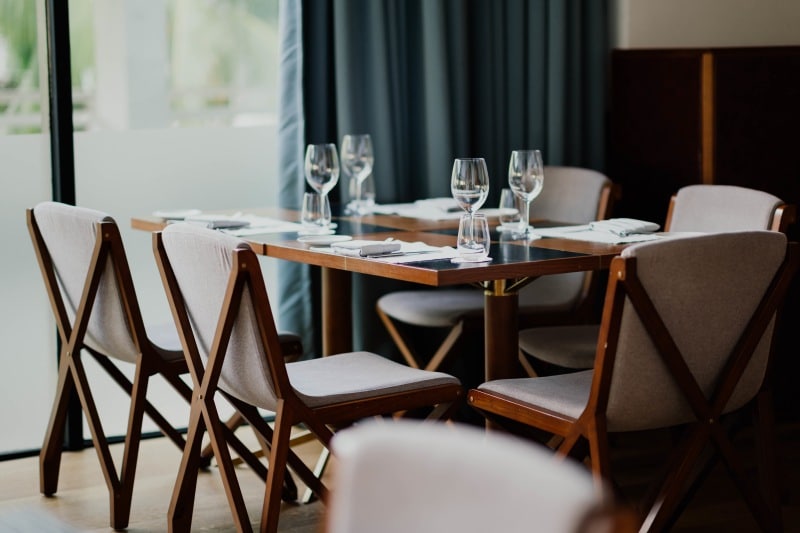
Walk into any successful restaurant, and you will notice something subtle. The restaurant chairs feel right. The tables sit at a comfortable level. Guests lean back naturally, rest their arms with ease, and stay longer than they planned. None of that happens by accident.
Behind every comfortable dining experience is a quiet layer of science. Chair heights, seat depth, back angles, and table dimensions all work together to shape posture, circulation, and even how long guests choose to remain seated. In a competitive hospitality market where margins are tight and guest experience drives revenue, ergonomics is not decoration. It is a strategy!
Understanding the measurable principles behind restaurant chair heights and table ergonomics can help owners design spaces that support comfort, efficiency, and long-term profitability.
Why Seat Height Is More Than a Design Choice?
The standard dining table height in the United States is approximately 28 to 30 inches. For this range to function properly, the average restaurant chair seat height should fall between 17 and 19 inches. That creates an ideal gap of about 10 to 12 inches between the seat and the tabletop.
This spacing allows:
- Natural elbow positioning at roughly 90 degrees
- Proper thigh clearance under the table
- Reduced shoulder elevation during eating
- Balanced weight distribution across the hips
When the seat is too low, guests must lift their shoulders to reach the table. Over time, this creates neck and upper back strain. If the seat is too high, legs may dangle slightly, reducing circulation and causing discomfort within minutes.
Anthropometric research shows that the average American adult has a popliteal height, the distance from the floor to the underside of the thigh behind the knee, of roughly 16 to 18 inches. Designing the seat height within this range ensures that most guests’ feet rest flat on the floor. Flat foot support improves circulation and stabilizes posture, especially during meals lasting longer than 45 minutes.
In practice, even a one-inch deviation can change how a guest perceives comfort.
Table Height, Clearance, and Legroom Dynamics
Table ergonomics is not just about height. Clearance and spatial geometry matter just as much.
The ideal knee clearance under a restaurant table should be at least 24 inches from the floor to the underside of the apron or support frame. For optimal comfort, 26 to 27 inches offers greater flexibility across body types.
If clearance is restricted:
- Guests adjust posture frequently
- Chairs are pushed back repeatedly
- Movement within aisles increases
- Server traffic becomes less efficient
From an operational standpoint, restricted legroom slows table turnover because guests feel cramped and fatigued more quickly.
Tabletop thickness also plays a role. A thick 2-inch solid wood top reduces knee clearance compared to a 1-inch laminate surface. While thicker tops convey durability and luxury, designers must compensate by ensuring proper base height to maintain ergonomic clearance.
These adjustments influence both physical comfort and psychological perception of space.
Back Angle and Lumbar Support in Dining Chairs
Seat height gets most of the attention, but backrest design determines how long guests remain comfortable.
Research on seated posture suggests that a backrest recline angle of 100-110 degrees supports spinal neutrality during short- to medium-duration seating. In restaurants, a slight backward angle encourages relaxation without promoting excessive lounging.
Chairs with backs that are too upright, near 90 degrees, increase spinal load and reduce perceived comfort within 20 to 30 minutes. On the other hand, overly reclined chairs reduce dining efficiency and may negatively affect table turnover.
Lumbar contact is equally important. Even a subtle curve in the lower backrest helps maintain the natural inward curve of the spine. Without support, guests tend to slump forward, placing strain on the lower back and shoulders.
Booths, Bar Heights, and Ergonomic Variations
Different dining formats require different ergonomic standards.
Standard booth seating typically pairs with 30-inch tables and seat heights of around 18 inches. However, booth depth must allow at least 16 to 18 inches of usable seat space. Shallow booths create a forward-leaning posture, which increases fatigue. Bar-heightt seating operatesont a different scale. A 42-inch bar counter typically requires a seat height of 29 to 31 inches. Counter-height tables, about 36 inches tall, pair best with 24- to 26-inch seats.
In each case, maintaining the 10- to 12-inch vertical difference between the seat and the surface remains critical.
If that ratio shifts too far in either direction, guests experience shoulder lift, leg compression, or unstable posture. The same scientific relationship applies whether designing fine dining, casual cafes, or rooftop lounges.
Ergonomics and Revenue Performance
Ergonomics is not just about comfort. It directly influences revenue performance.
Consider these operational impacts:
- Comfortable guests order additional items such as dessert or drinks
- Reduced physical strain lowers negative reviews related to seating
- Proper spacing improves server circulation and efficiency
- Balanced posture reduces chair movement noise and floor wear
In high-traffic restaurants, furniture replacement costs can represent a significant long-term expense. Chairs set at incorrect heights are often replaced sooner, not because of structural failure, but because guests report discomfort.
Durability and ergonomics should work together. A metal-frame chair with a properly measured 18-inch seat height and reinforced back support may cost slightly more upfront, but it can reduce furniture inventory turnover and improve guest retention.
Market data from the North American restaurant industry shows that customer experience remains one of the top three drivers of repeat visits. Seating comfort is a measurable component of that experience.
Designing for a Diverse Customer Base
Restaurants serve a wide demographic. Adults, seniors, teenagers, and children all share the same seating environments.
Designing within established ergonomic averages accommodates most body types, but slight flexibility improves inclusivity. Chairs that are too deep may not adequately support shorter guests. Extremely wide seats may reduce arm support for smaller frames.
Some operators integrate mixed seating heights or adjustable features in private dining areas to improve adaptability. While full adjustability is rare in commercial settings, careful measurement during procurement helps prevent costly redesigns later.
Even aisle spacing contributes to ergonomic performance. The recommended minimum aisle width in full-service restaurants is about 36 inches, allowing safe circulation without constant chair repositioning.
When guests move comfortably within a space, the overall experience feels seamless.
Where Comfort Meets Business Intelligence
Restaurant chair heights and table ergonomics operate at the intersection of science and strategy.
Thoughtful design supports circulation, posture, and relaxation. In return, guests stay longer, spend more, and return more often. Operational efficiency improves. Staff movement becomes smoother. Furniture lasts longer.
In an industry where experience defines reputation, seating is not a background detail. It is structural psychology expressed through inches and angles.
When measurements align with human anatomy, comfort becomes effortless. And when comfort becomes effortless, performance follows naturally.
