


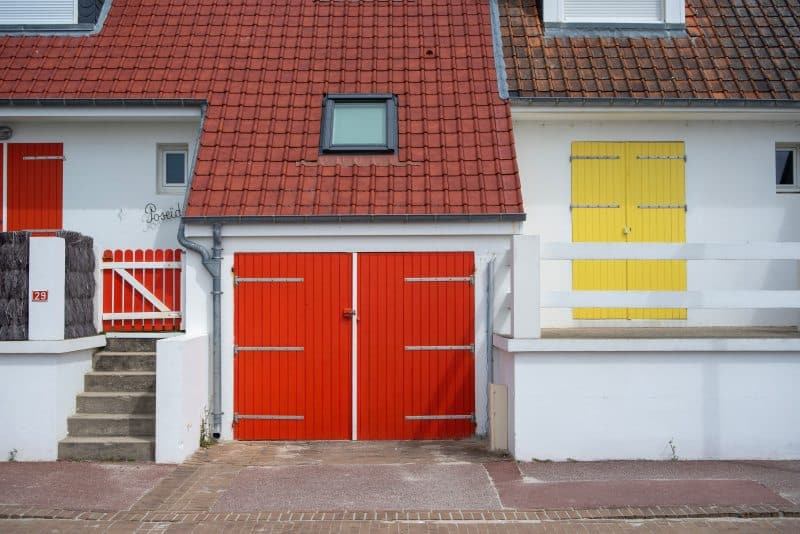
It may have worked perfectly fine the day before, yet now it simply won’t move at all. It’s natural to suspect the opener, click the remote, and wonder why it’s unresponsive. Often, however, there is an underlying issue, such as a failing roller, cable, or the door becoming unbalanced – and these can be difficult to identify yourself. Certain components, e.g. the spring, can fail unexpectedly, so routine inspection of the whole system is beneficial to spot any potential problems and remedy them, or call a garage door repair company to investigate, ensure any dangerous elements are addressed, and advise on what to repair and replace, if applicable.
Escalation From Minor Issues
There are multiple components that support a garage door, with the springs designed to offset some of the mass, and cables, drums, rollers etc assisting the opener to raise/lower the door, ideally with minimal effort, as the door should be balanced by the spring assembly. Therefore, if there is friction or obstruction occurring, it can have an adverse effect on other components, causing, for example, an unbalanced door, jamming, or increased load on the opener, and possibly even an inability to open/close due to a faulty or compromised cable.
The key here is that, despite the above, the opener may continue to work, exerting effort to try to operate the door. Should you begin to observe the door behaving irregularly, i.e. jerking, lifting at an angle, requiring increasing effort, etc, it’s advisable to seek advice about garage door repairs from a provider, who can diagnose the root-cause, and remediate, rather than just mask the problem. Obviously, this is not advocating to change all components that aren’t brand new, just to be proactive, but rather identify any degraded components, establish their impact, and action accordingly.
What Is Included in a Garage Door Maintenance Service?
At minimum, you would expect the engineer to inspect the key components, including the spring, cables, mounting, rollers, hinges, tracks, etc, to identify any wear, cracks, deformation, etc, and then inspect the balance/operation of the door, to note whether the opener is working excessively hard to move it, and potentially misaligned, among other checks.
Where applicable, they should also ensure the safety features of the door, e.g. the automatic reverse, and where fitted, photo electric cells, are operational, per the manufacturer’s guidance, and set the travel distances, if required, depending on any indications of malfunction. This may include:
- Identifying any degradation, defects, or deterioration, e.g. rollers, tracks, hinges, screws/bolts, etc;
- Evaluating the door’s operation, to identify any signs of sticking, imbalance, over-exertion, etc;
- Lubricating, per the manufacturer, at the designated areas only;
- Safety-test the door, e.g. auto-reverse, photo cells, if fitted, in accordance with the guidance, and;
- Highlight any necessary works, and any items to monitor, and advise of frequency, etc.
Per DASMA, homeowners are advised to carry out basic safety tests each month, and have the door system inspected and serviced annually by a qualified technician, with repairs made when needed, and refer to the manufacturer’s recommendations for any additional actions/inspection intervals.
Indications of Potential Problems
Increased/unusual noise, e.g. grinding, and/or sluggish, unstable, or erratic operation, are indicators of possible problems, but may not, in themselves, pinpoint a fault, as DASMA points out that, for example, the spring can emit a squeak under normal use, whereas a deteriorating cable may not create a notable sound, but you could detect visual indications, i.e. exposed wire, etc, that it needs attention.
Other symptoms to be aware of include, but are not limited to, the following:
- Uneven rise of the door, i.e. one end higher than the other;
- Snatching, sticking, halting, or otherwise inconsistent operation, and;
- Visible degradation, displacement, etc, of the cable, and/or
- An increase in apparent effort, or failure, to operate the door, and/or
- Failed safety-test of the door, e.g. auto-reverse, photo cells, if fitted, etc.
In these cases, particularly where the spring, cable, track, etc, is clearly compromised, or the door is distorted, you should refrain from using the door, as continued attempts to operate may exacerbate the problem(s). Where the door fails a safety test, cease using the opener, and do not force the door manually if it is jammed or unstable, due to the mass of the door, and potentially tension in the associated spring components, etc, if relevant, which can be hazardous.
How You, as the Homeowner, Can Inspect for Problems?
As noted above, you should not need to remove, or undertake major inspection, of the various door components, but visually, and during use, there are items to be aware of, which you can relay to an engineer, if required, to aid their investigation.
Refer to your manufacturer’s instructions for the door and opener, to identify the relevant guidance:
- Inspect, from an appropriate, safe distance, the tracks, door, rollers, and cables, while the door is in the closed position, noting any signs of bending, cracks, frays, etc, but do not touch, or attempt to manipulate, the spring, cable, and any connected mounting, etc, as noted above, due to the risk of tension, etc.
- Listen and observe, while the door is being operated, noting any grinding, rubbing, and/or deviation, but do not approach, let alone position beneath, the moving door.
- Conduct the manufacturer’s safety tests, if detailed, ensuring that you, others, and pets, are kept clear of the door.
- If you have stored items, obstructed, or covered, the door, or sensor, if fitted, relocate/clear, but do not attempt to straighten, re-align, or otherwise manipulate the track, adjust the springs, etc, as per the caveat above.
- Note when, and in what direction, any unusual sounds, etc, occur, whether on every cycle, etc, to assist a future engineer, if required, with the diagnosis.
Again, as referenced, DASMA recommends that you perform these inspections and safety-tests, where applicable, at least once monthly, and not to alter, adjust, or manipulate, any of the spring, cable, and any attached, associated, or connected, components, and follow any further advice provided by the manufacturer, if detailed, in relation to the maintenance, care, and inspection, of the door.
To Repair, or Replace, a Damaged Garage Door?
Not necessarily, as, subject to the extent of the damage, it may be feasible, and more economical, to repair, e.g. replace a roller, rubber, hinge, etc, where the remainder of the system is otherwise in good order, and functioning, and no significant structural damage, etc, has occurred, as discussed above, in which case, you should consult with your garage door provider, for a recommendation, and any costs, etc, involved.
However, where there is substantial damage, deterioration, wear, and/or repeated failures, it may be prudent to consider replacement, in which case, it would be beneficial to understand the approximate cost, and, according to Zonda, the 2025 report estimated this at around $4,672 US nationally, on average, for a standard U.S. garage door replacement project, etc, again, to help inform your decision, and, in any event, should prompt you to request a breakdown, from a repair provider, of essential, preventative, and optional, works, and, if replacement is advised, to compare costs, taking into account, any ancillary works, e.g. opener, tracks, etc, as applicable, and, ultimately, what represents best value, and will provide a durable, reliable, and safe, long-term solution, to meet your requirements.
Summary
In short, you may not require total silence from your door, but it’s wise to be cognisant of any variation, which could be indicative of developing issues, which, if attended to, could save from further, or increased, works, in due course, as outlined. Continue to conduct periodic, monthly, inspections, and safety tests, if recommended, and, if in any doubt, or identify any anomalies, contact your garage door service provider, to have it inspected, to forestall, and potentially mitigate, any, avoidable, repair works, at a later date.
