


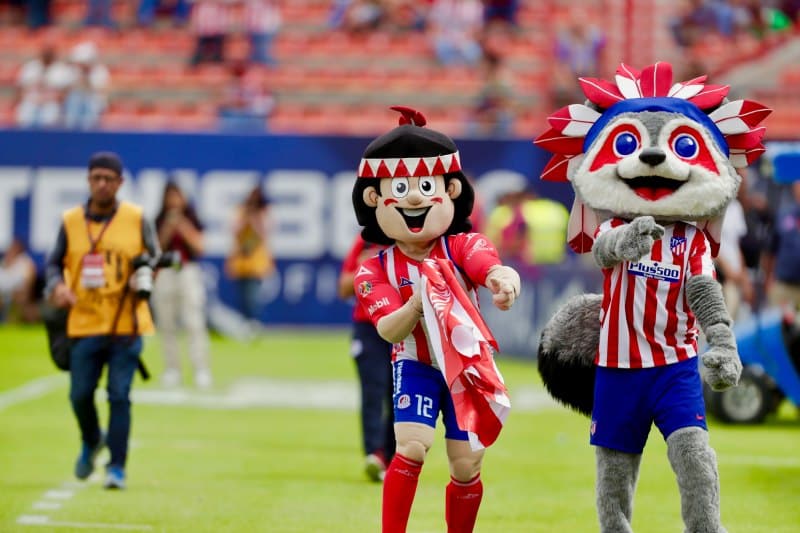
Every so often the subject of football mascots gets treated as a joke, right up until one is taken away. Then the reaction tells you exactly how much they mattered all along.
Arsenal fans learned that in October 2020, when the club made the Gunnersaurus role redundant during pandemic cost-cutting. The backlash was immediate and considerably larger than anyone at the Emirates seemed to expect. Supporters who had never given the dinosaur a second thought suddenly cared a great deal, and the role was subsequently restored.
That episode is worth revisiting, because it exposes something about what mascots actually do.
The Gunnersaurus Origin Story
Gunnersaurus Lad arrived in 1993, and the origin is unusually good as these things go: the design came from an entry submitted by a young supporter in a club competition. The character then spent the better part of three decades at Highbury and later the Emirates, appearing before matches, at community events, and in more supporter photographs than anyone could count.
Three decades is longer than almost any player, manager, or kit design lasts. That is the first thing people underestimate about a mascot. It is one of the few constants in a sport defined by turnover.
What They Are For?
Mascots serve a purpose that has nothing to do with entertaining adults.
For children attending their first match, the mascot is the only part of the club that is genuinely accessible. Players are distant figures on a pitch. The mascot is at ground level, will pose for a photo, and does not have anywhere more important to be. A significant portion of lifelong supporter attachment forms in exactly those moments.
They also do work well away from matchday. Club community programmes, school visits, hospital appearances, and charity events rely on a recognisable figure who can attend without the scheduling complications of first-team players.
And they matter commercially, in ways clubs are sometimes reluctant to spell out. A character that appears on merchandise, in club media, and across social channels has measurable value attached to it.
The Operational Reality
Behind the visible part sits an operation most supporters never see.
Wearing a mascot suit is physically demanding work. Visibility through the head is limited, hearing is muffled, and internal temperature rises quickly once the performer starts moving. Well-run clubs schedule appearances in blocks with mandatory breaks, and pair the performer with a handler who guides them through crowds and watches for signs of trouble.
The suits themselves are substantial pieces of equipment. Because a club character is tied to a specific design and identity, clubs commission custom made mascot costumes rather than adapting anything generic, and lead times generally run into months. Suits also wear out. Weather exposure, cleaning cycles, and heavy use mean replacements are planned well in advance rather than ordered in a panic.
Then there is the supporting kit that never gets mentioned: ventilated stands so the costume holds its shape between appearances, carry bags for away days and community visits, spare hands and shoes for the components that go first, and cooling vests for summer fixtures and pre-season tours.
The Wider Tradition
Football mascots are not a recent gimmick. The 1966 World Cup in England introduced World Cup Willie, generally recognised as the first mascot created for a major football tournament, and every subsequent World Cup has had one.
Club mascots followed, and the results across English football range from the genuinely beloved to the frankly baffling. The successful ones share a common trait: they have been around long enough that removing them would feel like removing part of the club.
Why It Came Back?
The 2020 episode resolved the way it did because supporters made clear that a mascot is not a discretionary line item in the same category as an office subscription. It is part of the matchday experience, and for a meaningful number of fans it is part of how their relationship with the club began.
Clubs that understand that treat the mascot programme as an asset with a long horizon, staffed and funded properly. Clubs that do not tend to find out the hard way, usually in public.
