


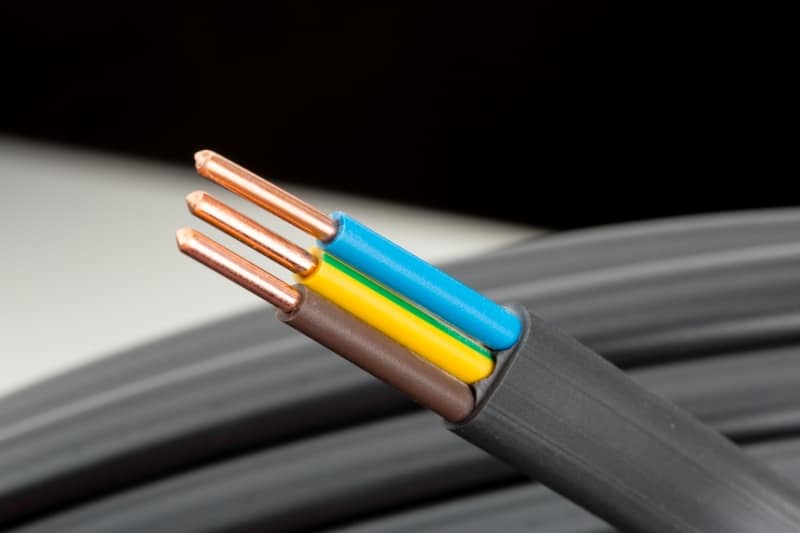
When engineers are carrying out projects such as designing control panels, installing industrial automation equipment, or routing network infrastructure, it is crucial for them to select the right cables for the job.
If this describes your situation and you are presently browsing and comparing the various cable solutions available from RS, you will probably be aware of the importance of choosing the appropriate voltage rating or conductor size.
However, you might not necessarily be so well-versed in the roles that two other key concepts, cable flexibility and minimum bend radius, should play in your decision-making.
Why Are Cable Flexibility and Bend Radius Such Crucial Factors?
These are both aspects of a cable that can give rise to confusion. Nonetheless, they are critical factors for preventing damage during installation and use.
Ignoring the matters of cable flexibility and bend radius can heighten the likelihood of conductor breakage, insulation failure, signal degradation, and/or safety hazards.
All in all, if you care about ensuring ease of installation, strong all-round system performance, and the long-term reliability of whatever project you’re working on, you will need to think carefully about these elements when specifying cables.
An Introduction to Cable Flexibility
The term “cable flexibility” refers to the ease with which a cable can bend, twist, or move without sustaining damage.
The flexibility that any given cable can offer will depend on a range of factors. One of those is conductor construction. Stranded conductors, for example, which consist of many thin wires twisted together, are much more flexible than solid conductors.
The insulation and jacket materials also play a role in how flexible a particular cable is. For especially dynamic applications requiring superior flexibility, it is often cables made from rubber, silicone, or specialist polymers that are chosen. However, PVC is a common material too, and it provides good flexibility for many uses.
How Flexible Does Your Chosen Cable Need to Be?
The golden rule is to ensure whatever cable you select is well-matched to the operating environment and movement requirements.
The particular application, then, will dictate the level of cable flexibility necessary. There won’t be a need for much flexibility in the cables you specify for a static installation, given that the cables will stay fixed once they have been fitted.
But when it comes to occasional movement applications, continuous flexing applications, or high-performance motion systems, it can be expected that much greater cable flexibility will be required for such purposes.
What Is Bend Radius?
The minimum bend radius is the smallest radius to which a cable can be bent without damage being caused to the conductors, insulation, shielding, or jacket.
This bend radius is often measured from the inside curve of the bend. It is typically specified by the manufacturer, with most of them expressing it as a multiple of the cable’s outside diameter (OD).
So, for example, if a cable has a 10mm outside diameter and a recommended minimum bend radius of 10x OD, the minimum bend radius would be 100mm.
Why Does Bend Radius Matter?
The importance of a given cable’s minimum bend radius lies in the fact that going beyond it can lead to a number of problems, not all of which will be immediately visible.
Such potential consequences include:
- Damage to conductors
- The insulation cracking or weakening
- Shield degradation
- Compromised signal integrity
- Premature cable failure
- Heightened risk of short circuits and electrical faults
These dangers underscore the importance of installers and designers, where possible, ensuring the installed bend radius comfortably exceeds the manufacturer’s minimum specification.
What Bend Radius Will Your Application Need?
The exact requirements for bend radius will hinge on such factors as the manufacturer and cable type. Nonetheless, you may find these broad guidelines useful, even if they should be treated as rough “rules of thumb”, not universal rules:
| Application type | Typical bend radius |
| Static installations | 4x to 6x cable diameter |
| Occasional flexing | 6x to 8x cable diameter |
| Continuous flexing | Approximately 10x cable diameter |
| High-flex robotics and automation | 5x to 10x cable diameter, depending on design |
You should always consult the manufacturer’s datasheet for the specific cable you are looking to install.
Conclusion: Two Important Priorities Not to Overlook During Cable Selection
If you’re involved in an electrical or industrial system design project, cable flexibility and bend radius should be among your uppermost considerations.
By understanding the factors dictating the specific cable flexibility and bend radius requirements your installation will have, and selecting the cables to match, you can help ensure reliability at the same time as protecting valuable equipment.
