


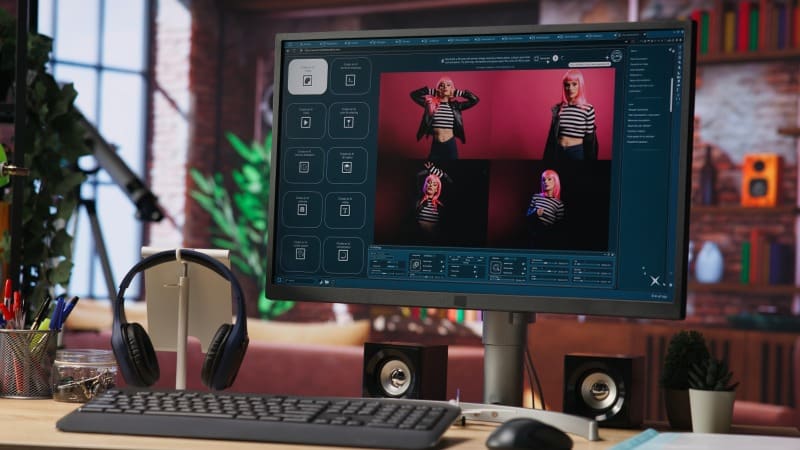
Video content has become the default language of digital communication. Businesses need promo clips. Educators build instructional series. Social media creators publish daily. And traditional production, with its layered software, long timelines, and technical overhead, simply hasn’t kept up with that pace.
That’s the gap AI video tools are stepping into. The Seedance 2.5 AI video creation tool is part of this shift — not as some dramatic overhaul of how video gets made, but as a practical option for teams and individuals who need to produce more without stretching their resources thin.
Why Video Production Has Always Been a Bottleneck?
The core problem with video has never been ideas. It’s execution. Scripting, visual planning, editing, transitions, effects, rendering — each stage has its own learning curve and its own time cost. For a solo creator or a small marketing team, managing all of that across separate tools is where projects stall.
AI-powered video generation solves this by automating the non-creative decisions. The system handles interpretation of prompts, generation of scenes and suggestions for transitions. And that frees the project’s creator to focus on what really matters: the message, the audience and whether the content is working.
What’s Gotten Better in Recent AI Video Systems?
Earlier AI video tools had a consistency problem. Motion looked unnatural. Scenes didn’t hold together visually. Anything beyond simple sequences needed significant cleanup before it was usable.
The newer generation, including Seedance 2.5, has improved on those fundamentals. Scene continuity is more reliable. Motion flows better. The system interprets user instructions more accurately, which means fewer revision cycles and less post-production time before something is ready to publish.
That improvement in output quality is what’s actually expanded the range of use cases — from basic animated clips to product demos, educational explainers, promotional videos, and short-form social content.
One Workflow Instead of Five
The practical value of integrated AI production is that it compresses the pipeline. Instead of moving a project through five different tools before it’s done, creators can draft, revise, and iterate within a single environment. That alone changes how quickly a concept becomes a finished piece.
For marketing teams working across multiple campaigns, that speed matters. For freelancers with tight client deadlines, it matters even more. And for educators or nonprofit communicators who need video but don’t have production staff, it removes a barrier that used to require either a budget or a steep learning curve.
What Marketing Teams Are Actually Using It For?
The volume problem in marketing is real. You need content for different platforms, for different audiences, delivered on a cadence that doesn’t slow down between campaigns. AI-assisted video generation allows teams to accelerate through the concept-to-draft phase, testing different angles, generating multiple versions, and discovering what works before locking in a polished final cut.
That kind of rapid iteration used to require either a large internal team or an expensive agency relationship. It’s now achievable with a smaller team and the right tools.
Social Media Has Changed the Timeline Expectations
Trends on social platforms move fast. The window between a topic being relevant and it being stale can close in days. Creators who rely on traditional production timelines often miss that window entirely.
AI video workflows compress the timeline enough that timely content is actually achievable. A creator can respond to a trending topic, produce something visually coherent, and publish it while the moment still has traction. That’s a meaningful advantage for anyone building an audience on a platform that rewards consistency and frequency.
Storytelling Doesn’t Change — The Production Process Does
One thing worth being clear about: AI doesn’t tell the story for you. The narrative, the character, the message, the emotional angle — all of that still comes from the person behind the project. What AI does is handle the assembly. It takes creative direction and turns it into visual output faster than manual production would allow.
For creators with limited animation or editing experience, that changes what’s possible. An educator with a good explanation but no production background can now visualize that content without building those skills from scratch. A small business owner can produce a product demo without hiring a production company.
That’s the real shift — not that AI is creating ideas, but that it’s removing the gap between having an idea and being able to execute it.
Human Oversight Is Still Part of the Process
AI-generated output needs review. Brand voice, factual accuracy, appropriate tone, accessibility — none of that gets checked automatically. The tools that work well in professional settings are the ones where editorial review is built into the workflow, not bolted on at the end.
Seedance 2.5 fits that model. It’s built to assist, not to replace the person making decisions about what the content should do and who it’s for.
What Comes Next
The direction AI video production is heading is toward tighter collaboration between automated generation and human editing — a workflow where both contribute rather than one substituting for the other. Output quality will keep improving. Prompt interpretation will get more precise. The distance between a rough AI draft and something publish-ready will keep shrinking.
Seedance 2.5 is a current point on that curve. It’s useful now, and it’s useful because it gives creators more time for the decisions that actually require them — the strategy, the story, and the judgment call about whether something is ready to go out.
